| Address | Sir Matt Busby Way, Old Trafford, Greater Manchester M16 0RA |
|---|---|
| Capacity | 74,158 |
| Opened | 19 February 1910 |
| Original architect | Archibald Leitch |
| Pitch | 105m x 68m, Desso GrassMaster |
| Record attendance | 76,962, Wolverhampton Wanderers v Grimsby Town, FA Cup semi-final, 25 March 1939 |
| Premier League record | 76,098, 31 March 2007 |
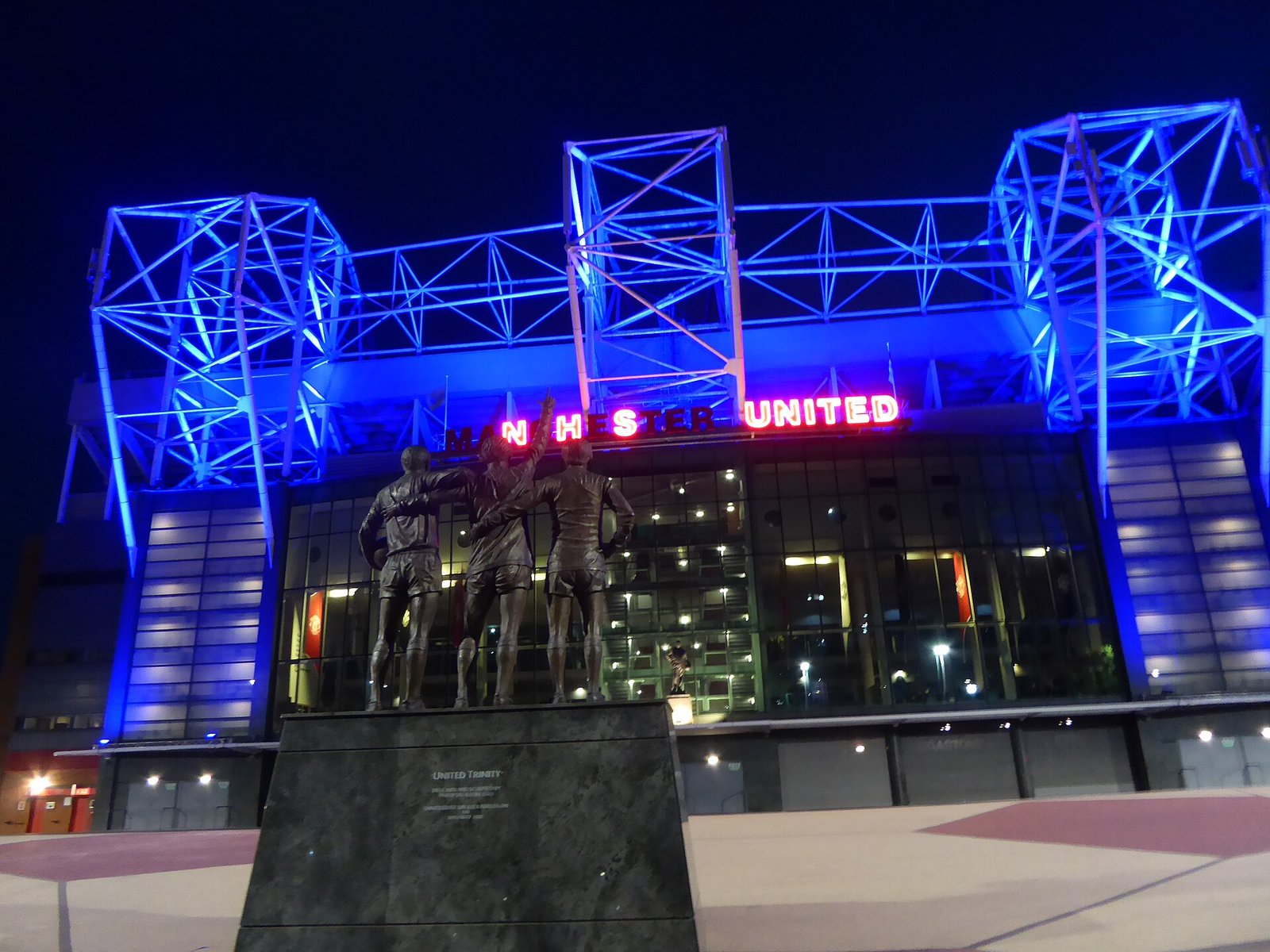
A short history of the stadium
United moved to Old Trafford in 1910 after outgrowing Bank Street. A German bombing raid on Trafford Park on 22 December 1940 damaged the ground, and United shared Maine Road with Manchester City from 1941 to 1949.
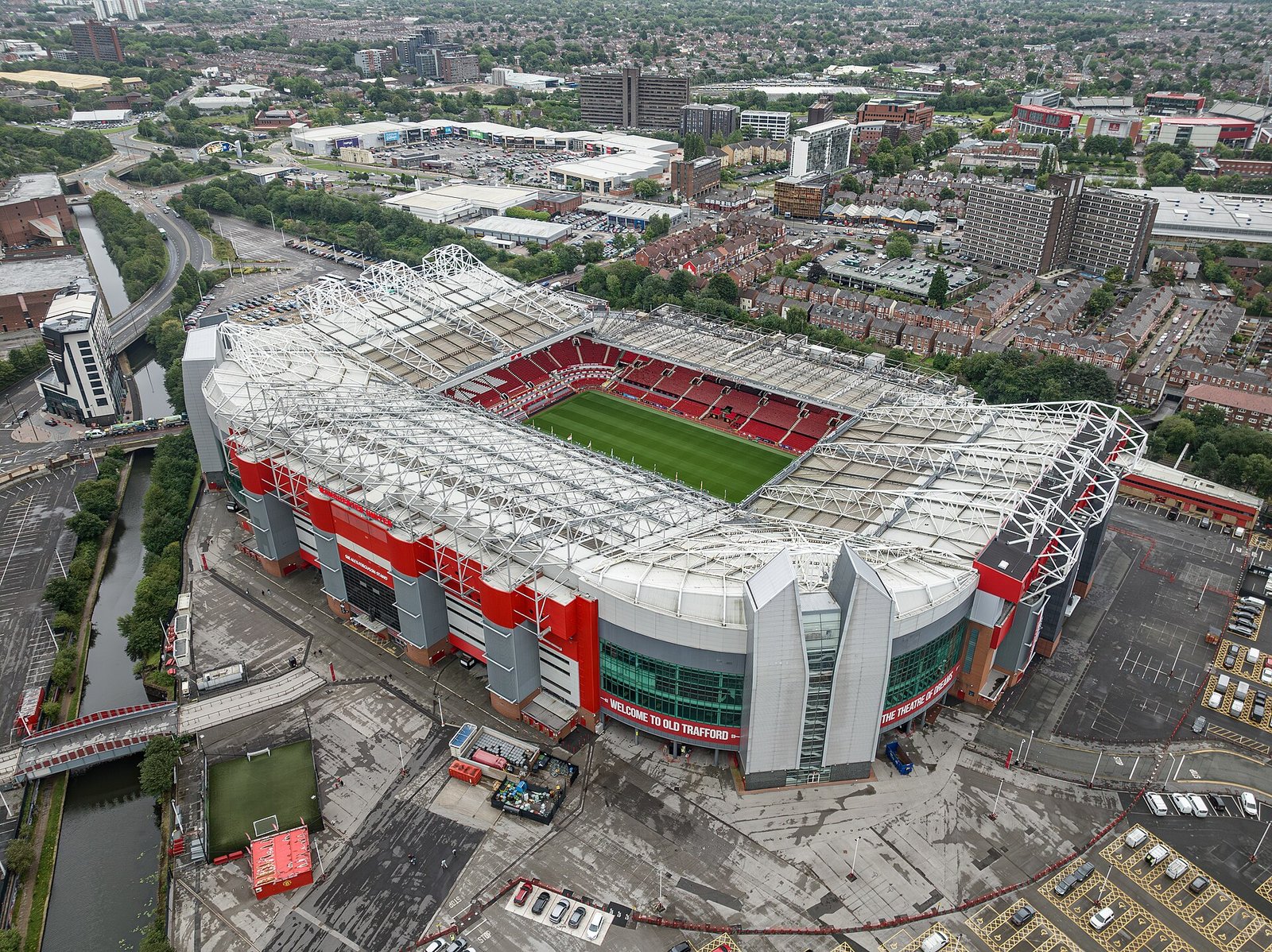
The United Road stand is now the Sir Alex Ferguson Stand and the Stretford End is the West Stand. The ground was all-seated after the Taylor Report, and extra tiers added to the North, West and East Stands in the 1990s and 2000s took capacity back close to its original 80,000 by 2006.
The new stadium plan
After Sir Jim Ratcliffe’s investment in 2024, the club began planning a new stadium of around 100,000 capacity near Old Trafford. Foster + Partners were retained on 11 March 2025 to design it. Nothing is built yet, and the club still plays every home game at Old Trafford.
Getting to the stadium
- Tram: the Old Trafford tram stop is next to the cricket ground, about half a mile from the stadium.
- Car: parking near the ground is restricted on matchdays. Check the club’s matchday guide before you travel.
Matchday and tour details are on manutd.com.
Sources
Old Trafford (Wikipedia); Manchester United F.C. (Wikipedia).